
Every year, MRI Safety Week provides an opportunity to recognize the professionals dedicated to creating and maintaining safe MRI environments. Among them, MRI Safety Officers (MRSOs) play one of the most critical roles.
As MRI technology continues to evolve, so do the responsibilities of the MRSO. Today’s MRI Safety Officer is no longer focused solely on screening policies or staff education. Modern MRI safety programs require continuous risk assessment, emergency preparedness, equipment evaluation, regulatory awareness, and implementation of technologies that reduce risk for both patients and healthcare professionals.
MRI Safety Week is an ideal time to evaluate existing safety practices and explore new opportunities to strengthen MRI safety programs.
The Evolving Role of the MRI Safety Officer
The responsibilities of an MRSO extend well beyond ensuring compliance with MRI safety guidelines.
Today’s MRI Safety Officers are responsible for:
Developing and maintaining MRI safety policies and procedures
Conducting safety risk assessments
Overseeing MRI staff education and competency
Managing MRI incident investigations
Evaluating new MRI technologies and equipment
Coordinating emergency preparedness planning
Supporting regulatory compliance
Promoting a culture of continuous safety improvement
Each of these responsibilities contributes to reducing preventable incidents and improving patient outcomes.
MRI Safety Is Built on Multiple Layers of Protection
No single device or policy can eliminate every MRI safety risk.
The most effective MRI safety programs combine:
Comprehensive patient screening
Controlled access to MRI Zones
Staff education and competency
Standardized emergency procedures
Regular safety drills
Continuous patient monitoring
Clear communication systems
Appropriate MRI-compatible equipment
Leadership committed to continuous improvement
This layered approach helps minimize risk while improving workflow and patient confidence.
Common MRI Safety Challenges
Despite significant advances in MRI safety, departments continue to face challenges such as:
Projectile incidents involving ferromagnetic objects
Medical emergencies occurring during MRI examinations
Delayed emergency communication
Limited visibility of patients during scanning
Patient motion requiring repeat imaging
Claustrophobic or anxious patients
Unauthorized access to Zone IV
Inconsistent adherence to MRI safety protocols
Many of these challenges can be reduced through better planning, training, and adoption of appropriate safety technologies.
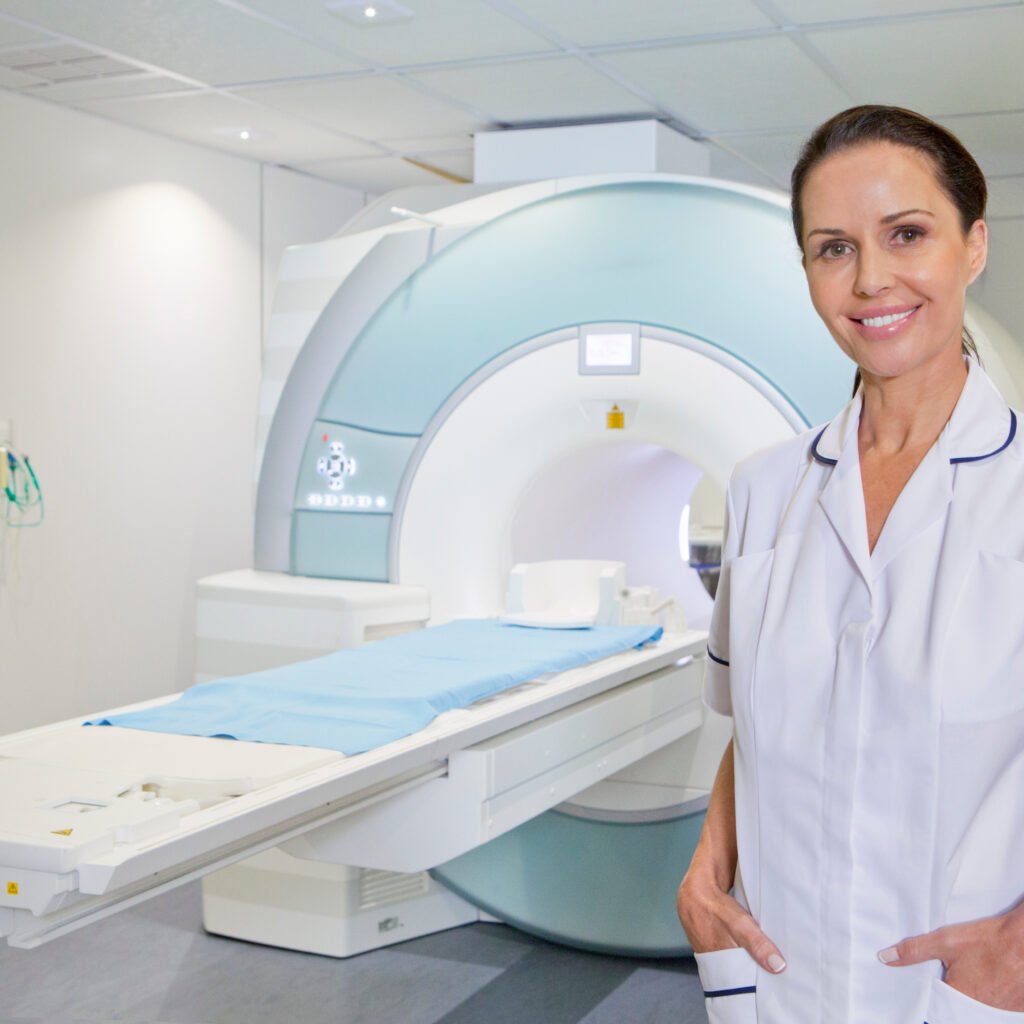
Technology as an Additional Layer of MRI Safety
Technology should never replace established MRI safety practices. Instead, it should provide additional safeguards that help MRI teams recognize hazards earlier, communicate more effectively, and respond more quickly when unexpected situations occur.
Several technologies now play an important role in comprehensive MRI safety programs.
MRI-Compatible Patient Monitoring Systems
Continuous visual monitoring allows MRI staff to observe patients throughout an examination without entering the scanner room unnecessarily.
These systems may help identify:
Patient distress
Unexpected movement
Medical emergencies
Equipment displacement
Patient requests for assistance
Improved visibility supports quicker intervention when needed.
MRI Communication Systems
Clear communication between the technologist and patient remains one of the most effective safety tools available.
Modern communication systems improve:
Patient reassurance
Scan instructions
Emergency communication
Staff coordination
Overall patient experience
Better communication often reduces anxiety, improves cooperation, and contributes to successful examinations.
Voice-Activated Emergency Alert Systems
Emergency situations inside the MRI suite can develop rapidly. Traditional methods of summoning assistance may not always be practical while remaining within MRI safety restrictions.
Voice-activated emergency alert systems are an emerging technology designed to provide hands-free activation of emergency notifications when immediate assistance is required.
Depending on system design, these technologies may provide:
Immediate emergency alerts
Notification of designated responders
Remote monitoring capabilities
Integration with camera systems
Faster communication during critical events
For MRI Safety Officers, these systems represent another layer of preparedness within an overall emergency response plan.
Patient Motion Detection Technologies
Patient motion continues to affect image quality, workflow efficiency, and patient throughput.
Motion detection technologies can assist MRI departments by:
Identifying excessive movement
Reducing repeat examinations
Improving diagnostic image quality
Supporting workflow efficiency
Enhancing patient care
While motion detection does not replace technologist observation, it provides additional information that may improve examination success.
MRI-Compatible Entertainment and Patient Comfort Solutions
Patient comfort directly influences patient cooperation.
Patients who feel informed and comfortable are generally more likely to complete examinations successfully without excessive movement or premature termination.
Comfort-focused technologies can contribute to:
Reduced anxiety
Improved patient satisfaction
Fewer incomplete examinations
Better image quality
Increased department efficiency
Building a Comprehensive MRI Safety Program
A successful MRI safety program combines leadership, education, technology, and continuous evaluation.
MRI Safety Officers should regularly assess:
Staff competency and continuing education
Emergency response procedures
MRI-compatible equipment inventory
Patient communication methods
Incident reporting and root cause analysis
New technologies that enhance safety
Regulatory updates and industry best practices
Regular review helps identify opportunities for improvement before incidents occur.
Creating a Culture of Safety
The strongest MRI safety programs are built on culture rather than compliance alone.
A positive safety culture encourages every team member to:
Report hazards without fear of blame
Participate in safety discussions
Follow standardized procedures
Support continuous learning
Share lessons learned from incidents
Advocate for improvements that enhance patient and staff safety
When safety becomes everyone’s responsibility, patient care benefits.
Looking Toward the Future
MRI safety continues to evolve alongside advances in imaging technology.
Emerging innovations—including intelligent monitoring systems, enhanced communication platforms, automated emergency notification systems, and AI-assisted workflow tools—are creating new opportunities to strengthen MRI safety programs.
As these technologies mature, MRI Safety Officers will play an essential role in evaluating how they can be integrated into existing safety strategies while maintaining compliance with established professional guidelines.
Celebrating MRI Safety Week
MRI Safety Week is an opportunity to reflect on the progress our profession has made and the work that still lies ahead.
Every updated protocol, every staff training session, every safety drill, and every investment in appropriate technology contributes to a safer MRI environment.
To every MRI Safety Officer, MRI technologist, radiologist, nurse, medical physicist, engineer, and healthcare professional dedicated to MRI safety—thank you for your commitment to protecting patients, colleagues, and the future of our profession.
Together, through education, collaboration, and innovation, we can continue raising the standard of MRI safety.
About Sound Imaging
For nearly 30 years, Sound Imaging has focused on developing MRI patient safety and comfort solutions that support MRI departments around the world. Our technologies—including MRI Room Alert®, MRI BoreCam®, MRI Stereo®, MRI Patient Motion Tracker (PMT), MRI Visor®, and MRI MicroCam®—are designed to help improve communication, patient monitoring, emergency preparedness, and workflow efficiency while supporting comprehensive MRI safety programs.
Learn more at www.soundimaging.com.
Leave A Comment